MONTHLY ANALYTICS REPORTING

Stop analyzing your marketing data. Start acting on it.

Most analytics tools tell you what happened. Ours tells you what to do about it: what to change, what to fix, and what's actually working. Every month, in plain language.

THE HONEST TRUTH

Most marketing data dies in a dashboard.

Maybe you've got an agency. Maybe you're handling marketing yourself. Either way, you're putting time and money into bringing in customers — and most days, you couldn't tell what's actually working from what isn't.

The analytics aren't really measuring what matters. The agency reports are mostly cherry-picked screenshots. And the data you do have is scattered across so many tools that nobody's putting it together.

So the spending continues. The guessing continues. And the same things keep underperforming because nobody can see what to actually change.

That's a terrible way to run a business.

WHAT'S IN YOUR REPORT

Get the whole picture, not just a slice.

Most reporting covers one slice. This covers the whole thing, every month:

  • Where your traffic came from, and which sources actually produce customers
  • What people do once they land on your site
  • Whether AI assistants name you when buyers ask
  • Whether they're sending you anyone, and what those visitors do
  • Tracks your changes and their impact, so the recommendations sharpen each month
  • Gives you a prioritized list of action items for improving your marketing performance
WHAT WE DO DIFFERENTLY

Most marketing reports have the same three problems.

The tracking isn't set up right. The numbers you see are cherry-picked. And nothing in there tells you what to do next. Here's what we do about each one.

  1. We make sure you can trust the numbers.

    We regularly find tracking that's incomplete or incorrectly configured. And when the tracking is wrong, the decisions based on it can be wrong too.

    You might put more money into a channel that isn't actually bringing you customers, or cut spending on one that is. The report can't tell you the truth if the underlying data isn't reliable.

    That's why an experienced tracking specialist reviews and fixes your setup before we create your first report.

  2. Nothing is cherry-picked.

    A lot of marketing reports highlight the wins and ignore the things that aren't working. The trouble is, the things going badly are often the things most worth fixing.

    If they never make it into the report, they never get fixed, and they can keep costing your business month after month.

    Our monthly reports show you what's working, what's not, and what needs your attention.

  3. Find out exactly what to do next.

    Most marketing reports hand you a pile of numbers and stop. Nobody tells you what any of it means or what you're supposed to do next. We do.

    Every report ends with a prioritized list of specific action items. This page. This headline. This campaign. Each recommendation includes the numbers behind it, why it matters, and what it's worth to your business.

    Then the next report checks what you changed, what happened, and whether it worked. If a change helped, you'll see it. If it made things worse, the report says so.

AI SEARCH

AI sends fewer visitors. They convert better.

More buyers now ask an assistant before they ever see a page of search results. For most local businesses that's still a small stream of traffic — but it's growing quickly, and the people it sends tend to show up already knowing what they want.

Here's one client's July, side by side:

17.6% Visitors from AI who took action
10.5% Visitors from search who did
+113% Growth in AI visits that month

These are small numbers: 34 visits from AI against 1,195 from search. We'd rather show you that than let a percentage do the talking on its own.

Your report covers both halves of this every month. Whether the assistants name you when someone asks for a business like yours, and what happens to the people they send.

The first report sets the baseline. After that, you get to watch it move.

WHY IT GETS SMARTER

The report you get in month six knows things month one couldn't.

Most reports have no memory. Every month starts from zero: same charts, new numbers, no record of what you did about last month's.

Ours remembers. Raised a budget, rewrote a headline, added a booking button — the next report checks what happened and tells you whether it worked.

That loop is the flywheel in our name. Every month builds on the last, so the recommendations get more specific to your business — not best practices that could apply to anyone. And that history is the part nobody can shortcut: a competitor can copy a chart, but they can't copy six months of evidence about what your customers actually respond to.
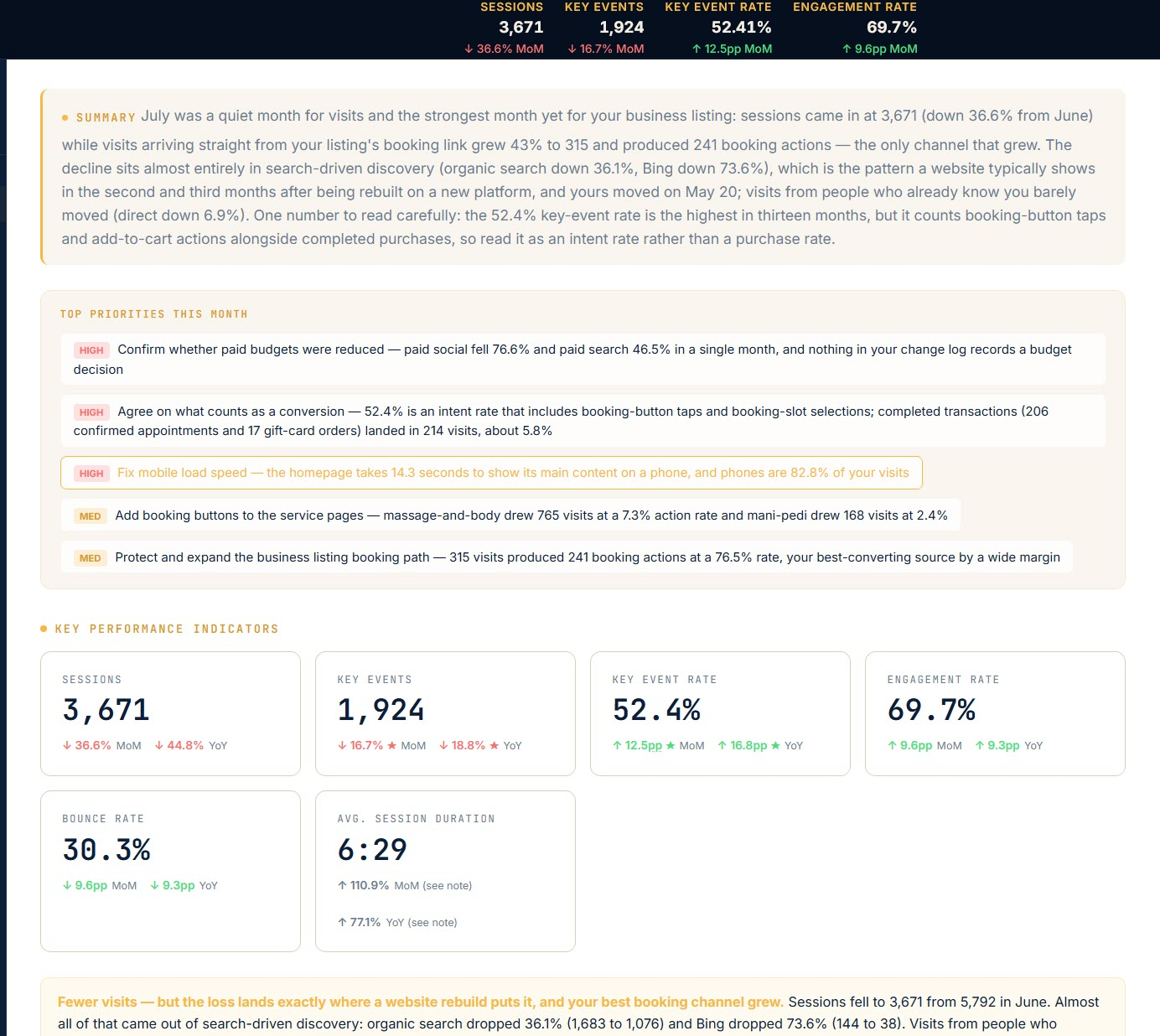
WHAT A REAL REPORT LOOKS LIKE

Most reports are a pile of charts you're left to figure out on your own. Here's a sample of what ours looks like:

The opening of a real monthly report. A written summary explains that July was a quiet month for visits and the strongest month yet for the business listing, and flags that the 52.4% key-event rate counts booking-button taps rather than completed purchases. Below it, five priorities for the month are marked High or Medium, followed by six cards showing the headline numbers against last month and last year.
Swipe to read across →

Want to see a full report?

Click below and we'll send you a full demo report. Check out all the tabs, all the findings, and all the recommendations. And remember — this is what a first report looks like. They only get smarter from here.

Get a demo report →